If you've recently started looking into piping options for a construction project, whether it's a house, a commercial building, or an infrastructure job, you've probably come across UPVC more than once. It's everywhere. And for good reason. This is particularly true for construction projects in Islamabad and Multan, where demand for durable piping systems continues to grow. And for good reason.
But "UPVC is good" isn't enough information when you're actually making a purchase decision. There are different grades, different pressure ratings, different fittings, and different suppliers, and the wrong choice in any of those categories creates problems that are annoying at best and expensive at worst.
This guide is for anyone who wants to buy right the first time.
What UPVC Actually Is
UPVC stands for Unplasticized Polyvinyl Chloride. The "unplasticized" part is what makes it different from regular PVC; it means no softening agents have been added, which gives the material its rigidity and makes it suitable for pressure applications.
It doesn't rust. It doesn't corrode. It handles a wide range of soil conditions and temperatures. The smooth internal surface means water flows efficiently without the buildup that affects older metal pipes over time. And it's significantly lighter than metal alternatives, which cuts down on handling and installation time on site.
For plumbing, drainage, and irrigation in Pakistan's varied climate and soil conditions, UPVC pipes and fittings in Pakistan, especially in Islamabad and Multan, have become the practical standard, and that shift has happened for good reason.
The Different Types of UPVC Pipes
Not all UPVC pipes are the same, and understanding the basic categories saves a lot of confusion when you're comparing options.
Pressure pipes are designed for fluid transmission systems, both above-ground and underground. These are rated by SDR (Standard Dimension Ratio), which determines how much pressure the pipe can handle. Lower SDR means thicker walls and higher pressure capacity.
Drainage pipes handle wastewater and sewage. They're not pressure-rated the same way supply pipes are, but they come in different sizes and configurations depending on the application, internal drainage, external drainage, and underground sewage lines.
Conduit pipes are used for electrical cable protection. Different application entirely, but UPVC is the material of choice here too because of its insulating properties and durability underground.
Knowing which category your project needs before you start talking to suppliers avoids a lot of back and forth
What to Look for in UPVC Fittings?
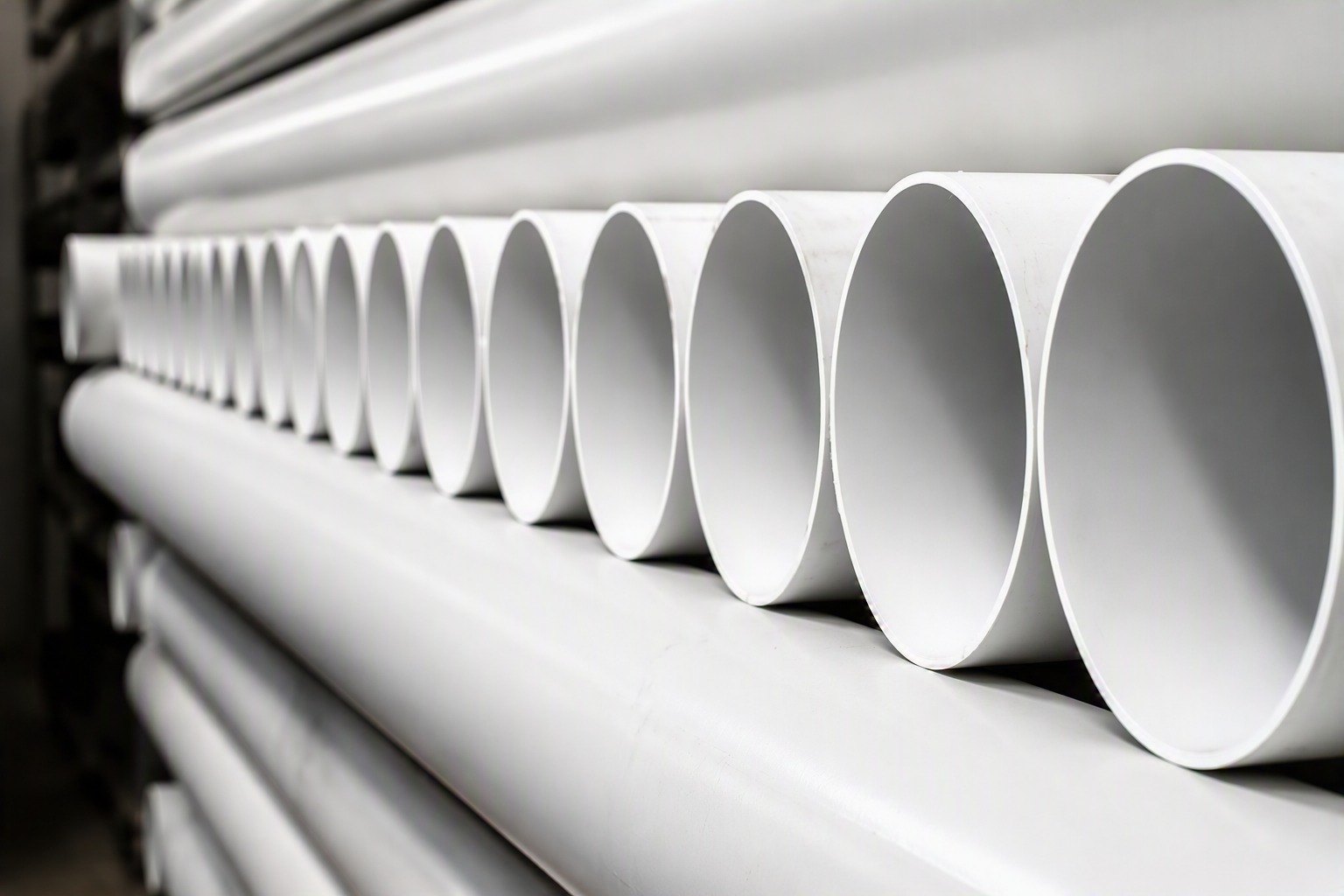
The pipe is only part of the system. UPVC fittings in Pakistan, especially in cities like Islamabad and Multan, such as elbows, tees, reducers, couplings, end caps, valves, are what connect everything together, and the quality of the fittings matters just as much as the pipe itself.
A few things worth checking:
- Dimensional compatibility Fittings need to match the pipe's outer diameter precisely. Even small mismatches create weak points that fail under pressure or cause leaks over time.
- Material consistency Fittings should be made from the same grade of UPVC as the pipe. Mixing material grades in the same system creates inconsistency in thermal expansion behavior and joint integrity.
- Joint type Solvent cement joints are standard for most UPVC systems. Rubber ring joints are used for larger diameter pipes and drainage. Make sure the fitting type matches your installation method.
- Standard compliance Fittings manufactured to recognized standards, ASTM, BS, or local equivalents, give you a verifiable quality baseline rather than just a manufacturer's assurance.
Pressure Ratings and Why They Matter?
One of the most common mistakes buyers make is not paying enough attention to pressure ratings, especially for those applications where higher operating pressure is required.
The pressure rating of a UPVC pipe is determined by its SDR class and the material's pressure rating. Using a pipe with too low a pressure rating in a high-pressure system is a failure waiting to happen. Using one rated far above what's needed wastes money unnecessarily.
For residential applications, SDR 26 or SDR 32.5 typically covers most requirements. For higher-pressure mains or commercial supply systems, SDR 21 or lower is more appropriate. Your project engineer should be specifying this, but as the buyer, understanding what you're being asked to source matters.
What the Pakistan Market Looks Like
The UPVC pipes &fittings market in Pakistan has grown significantly over the past decade. Local manufacturing has improved, and there are now established domestic producers alongside imported options.
The range in quality, however, is wide. Price-driven purchasing without attention to standards compliance is one of the most common ways construction projects end up with piping systems that underperform or fail prematurely. A pipe that costs less upfront but doesn't hold its pressure rating or degrades faster than expected costs far more in the long run, especially when it's already installed.
Buying from manufacturers who produce to documented international standards and can provide test certifications is worth the small price premium. The accountability that comes with a certified product is real and valuable.
Why International Industries?
International Industries UPVC pipes and fittings are manufactured to recognized international standards across the full range of applications:pressure supply, drainage, and conduit. The product range covers the breadth of what most residential, commercial, and infrastructure projects require, and the manufacturing consistency means what you specify is what you get.
For anyone navigating the UPVC pipes and fittings in the Pakistan market and trying to make a confident purchasing decision, starting with a manufacturer that takes standards compliance seriously removes a significant amount of guesswork from the process.
Bottom Line
UPVC is the right choice for most piping applications in Pakistan. But the right choice only delivers if you buy the right grade, the right pressure rating, the right fittings, and from the right supplier.
Take the time to understand what your project actually needs before you buy. The pipes going into your walls and underground today will be there for decades. That's worth getting right.
FAQs
How long do UPVC pipes last in Pakistan's climate?
Quality UPVC pipes have a service life of 50 years or more under normal operating conditions.
Can UPVC pipes be used for a hot water supply?
Standard UPVC is not suitable for hot water applications, as it softens at elevated temperatures.
How do I verify that UPVC fittings meet the required standard?
Ask the supplier for test certificates and standard compliance documentation. Reputable manufacturers producing to ASTM, BS, or equivalent standards can provide this. If a supplier can't produce documentation, that's a signal worth taking seriously before you commit to a purchase.