Pakistan’s manufacturing sector has been quietly expanding in ways that don’t always make headlines but show up clearly in the numbers, new industrial zones, increased capacity across textiles, food processing, pharmaceuticals, and consumer goods, and a construction pipeline that shows no sign of slowing.
Behind all of it, in ways that are easy to take for granted, is steel. It’s in the structures that house the factories, the equipment that runs inside them, the piping systems that carry water, gas, and process fluids through production facilities, and the infrastructure that connects manufacturing output to the markets it serves.
The Structural Role
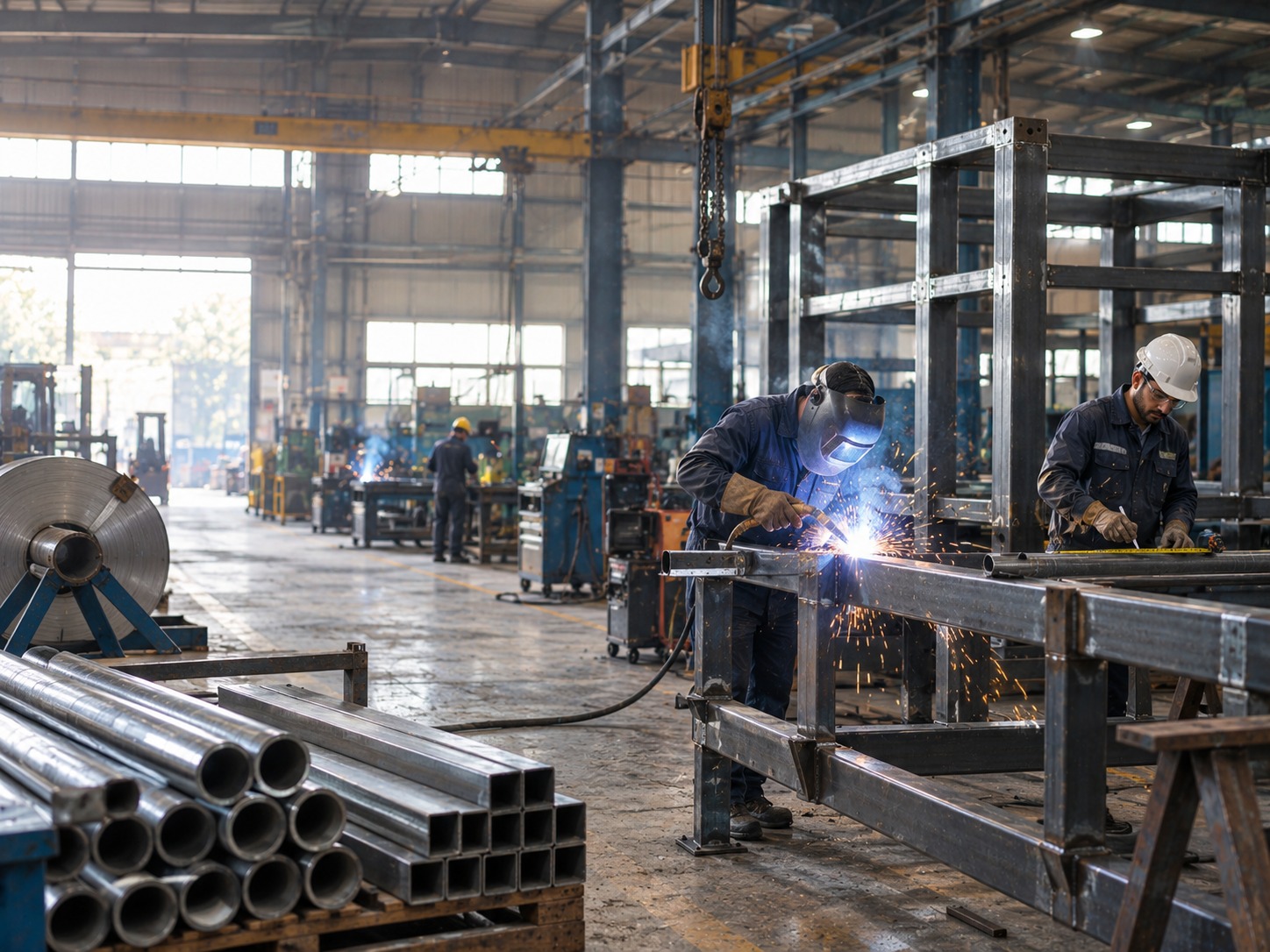
Every manufacturing facility starts with a structure, and structural steel is what gives large-scale industrial buildings their span and load capacity. Steel frames allow for the column-free floor plans that manufacturing requires, wide open spaces where equipment can be positioned and repositioned as production needs evolve, where material flows can be optimized, where expansion is possible without rebuilding from scratch.
The flexibility that steel structures provide is particularly valuable in manufacturing, where the production line of today is rarely the production line of ten years from now.
Process Piping and Fluid Systems
In manufacturing facilities, steel products play a vital role in piping systems, helping transport fluids and gases that keep industrial operations running smoothly. Carbon steel handles utilities- steam, compressed air, industrial water- that manufacturing processes depend on continuously.
The material specification in process piping matters significantly. The wrong steel grade in a corrosive process environment degrades faster than it should, creates contamination risk, and requires replacement at intervals that disrupt production. Getting it right means understanding what the pipe is carrying, at what temperature and pressure, and what the consequences of failure would be.
Infrastructure That Connects It All
Beyond the facility itself, manufacturing growth drives demand for the infrastructure that supports it: water supply networks, drainage systems, electrical conduit, and the broader utility infrastructure that industrial zones require to function.
Steel products used for infrastructure have to perform across the demanding conditions that industrial environments create, such as temperature variation, chemical exposure, mechanical stress, and the continuous operational demands that manufacturing places on everything supporting it.
International Industries produces a broad range of steel that manufacturing projects require, from Galvanized Iron and API Line pipes to UL-certified firefighting pipes, manufactured to international standards with the consistency that industrial procurement demands. When a facility is being built or expanded, the materials specification decisions made early determine how well everything performs across the facility’s operational life.
Conclusion
Manufacturing growth needs more than machines and labor. It needs the structural and infrastructure materials that make facilities function reliably. Steel products for manufacturing, specified correctly and sourced from a consistent manufacturer, are part of what turns a construction project into a production facility that performs.
FAQs
What steel product specifications are most commonly required for manufacturing facilities in Pakistan?
The most commonly required steel product specifications depend on the application. Mild steel (MS) and galvanized iron (GI) pipes are widely used for structural frameworks and utility systems in manufacturing facilities. API pipes are required for oil and gas applications, while UL -certified firefighting pipes are essential for fire protection infrastructure in industrial facilities.
How important is standards compliance for steel products in manufacturing applications?
Significantly, manufacturing facilities operate under regulatory oversight, and materials in process piping and structural applications often need to meet specific standards for safety and quality certifications.