Corrosion doesn't announce itself. It works quietly, inside buried pipes, behind wall linings, underneath protective coatings, until the damage is significant enough to surface as a leak, a structural failure, or an infrastructure replacement that costs ten times what proper material specification would have. In Pakistan, where the combination of coastal humidity, aggressive soils, and variable water chemistry creates genuinely demanding conditions, understanding corrosion isn't academic. It's the difference between a project that holds up and one that doesn't.
What's Actually Happening When Metal Corrodes
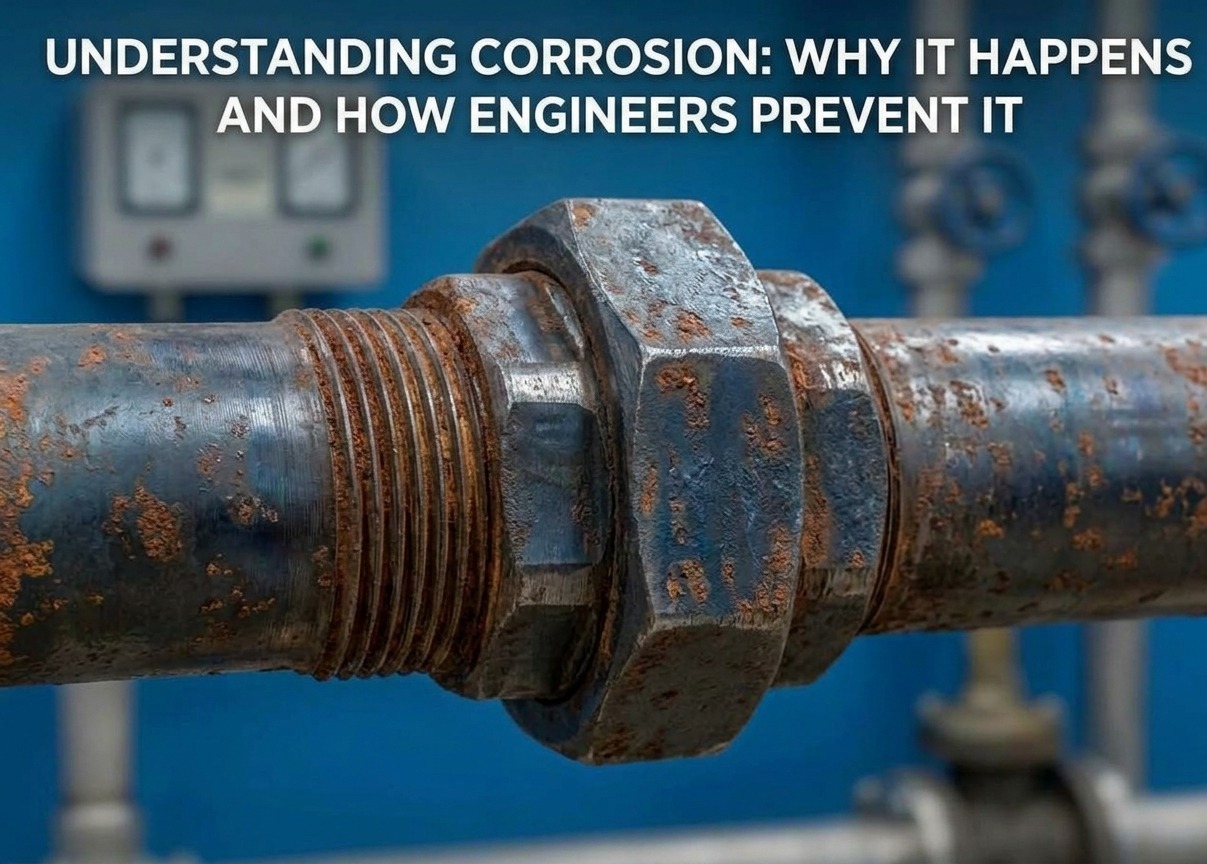
At its core, corrosion is a chemical reaction. Metal reacts with its environment, moisture, oxygen, dissolved salts, and acids, and forms compounds that are structurally weaker than the original material. Iron rusts. Steel degrades. Even metals with natural resistance break down under the right combination of conditions over enough time.
What determines how fast this happens is the specific environment the material is sitting in. High humidity accelerates the process. Chlorides, present in coastal air, in certain soils, and in some water supplies, dramatically increase the rate of attack on most metals. Soil conductivity affects how aggressively buried metal corrodes. And temperature cycling creates physical stress that breaks down protective layers faster than stable conditions would.
Pakistan has most of these in some combination depending on where a project is. Karachi's coastal environment is aggressive. Soil conditions across Punjab and KPK vary enough to create very different corrosion profiles for the same material. Water chemistry differs significantly between surface water and groundwater sources. A material specification that ignores these variables isn't a specification; it's a guess.
Galvanized Iron Pipes: How the Protection Works
Galvanized iron pipes are coated with zinc, applied through hot-dip galvanizing or electrogalvanizing, and the protection comes from two things working simultaneously.
The zinc layer acts as a physical barrier, separating the base metal from whatever it's in contact with. And because zinc is electrochemically more active than iron, when the coating is breached and both metals are exposed, the zinc corrodes first, sacrificing itself to protect the iron underneath.
This combination has made galvanized iron pipes a practical and cost-effective choice for water supply, irrigation, and structural applications across Pakistan for decades. They work. They're available. The price point makes them accessible for a wide range of projects.
Stainless Steel Pipes: Resistance Built Into the Metal
Where galvanizing adds a protective layer to a corrodible base material, stainless steel builds corrosion resistance into the material itself; it's not a coating applied on top, it's part of the alloy.
Stainless steel contains chromium, which reacts with oxygen to form a thin, stable oxide layer on the surface. That layer is what protects the metal from corrosive attack. And unlike a zinc coating that depletes over time, this passive layer is self-repairing; scratch it, and it reforms in the presence of oxygen. Grade 304 handles most standard corrosion environments well.
What Engineers Actually Do Beyond Material Selection
The right material is the foundation. It's not the whole structure.
- Jointing matters, because corrosion frequently initiates at connection points where water finds its way into gaps rather than on open pipe surfaces. Proper joint sealing and the right fitting specifications close that vulnerability.
- Cathodic protection, a controlled electrical current applied to buried pipelines, counteracts the electrochemical process that drives soil corrosion and extends service life significantly for buried metal infrastructure.
- Protective coatings on external surfaces add another layer of defense in environments where surface exposure is a corrosion driver.
- And maintenance - regular inspection that catches corrosion initiation before it progresses - is what keeps everything else working as intended across decades of service.
The approaches that fail are the ones that treat material selection as the only decision. The ones that work treat it as the first decision in a sequence, and make sure the rest of the sequence actually happens.
International Industries’ Range
International Industries supplies both galvanized iron pipes and stainless steel pipes that engineers and contractors need, manufactured to international standards with the documentation to verify what the products are claimed to be. For project teams working in environments where corrosion is a real variable, having both options available from a consistent, reliable source simplifies specification without forcing a compromise on quality.
Conclusion
Corrosion is manageable. It's not inevitable. The projects that handle it well are the ones that understand the specific environment they're working in, choose materials that address it from the start, and support those choices with proper installation and maintenance. Galvanized iron pipes and stainless steel pipes that projects depend on are both proven answers to the corrosion challenge, in the right context, specified correctly, from a manufacturer whose quality holds up when it's tested in the field.
FAQs
What are the common applications of stainless steel pipes in Pakistan?
Stainless steel pipes are widely used in applications where corrosion resistance and durability are critical. Common applications include handrails, furniture, fences, staircases, and bathroom accessories.
How long do galvanized iron pipes actually last in Pakistan?
In moderate conditions, non-aggressive soil, and standard water chemistry, well-specified galvanized pipes can last twenty to thirty years or more.